
WE RELIABLY KEEP THE WORLD IN MOTION
Welcome to BGK –
Endless Belts for Conveyors and Drives
Whenever goods and parts need to be transported or power transmitted, highly specialized belts are required.
We at BGK are one of the few global manufacturers capable of producing such belts in a single piece—and tailoring them precisely to each customer’s specific requirements.
Explore our website to discover what sets our endless belts apart from other belts and how, with our technology and experienced team, we can help you find the perfect drive and conveyor belt for your needs.
PERFECTION IN A SINGLE PIECE – WHAT IS TRULY ENDLESS?
The term “endless” pops up frequently and everywhere when it comes to drive and conveyor belts. But these products quickly turn out to be nothing more than sections that are (more or less) well glued together or joined in some other way. That’s because manufacturing what we call a true endless belt is anything but easy.
And not everyone can do it. Worldwide, only a very small number of companies possess the technology to produce a belt with absolutely no joints. And even fewer are capable of producing these endless belts in any length up to 10,000 mm.
THE ENDLESS BELT – BENEFITS AT A GLANCE
True endless belts offer an economically optimal and sustainable solution thanks to their unique advantages.
Perfect Power Transmission
Smooth and quiet
Cleanliness and Hygiene
Flexible and stable
SOLUTIONS FOR EVERY APPLICATION – THE VARIABLE BGK MODULAR BELT KIT
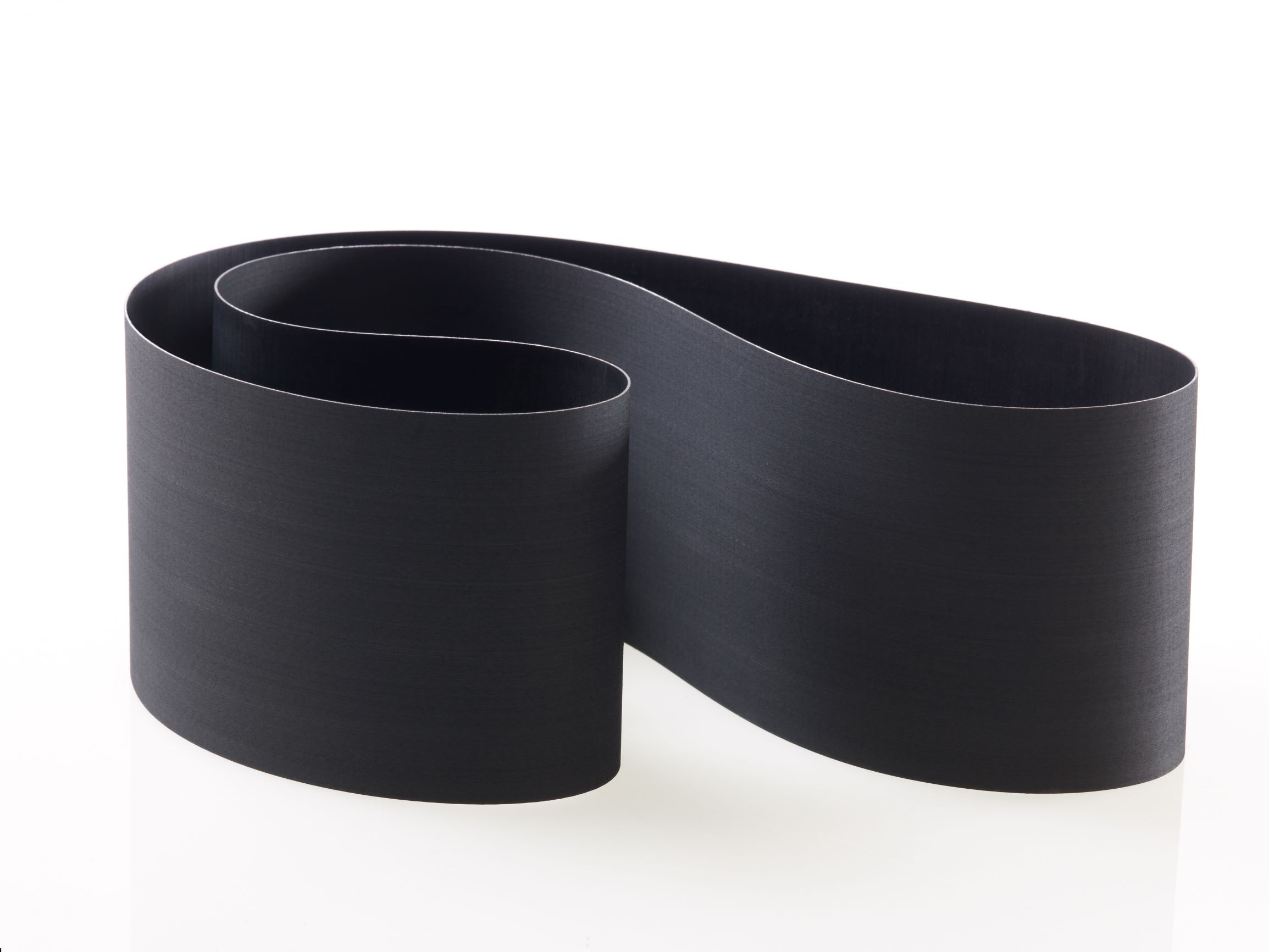
Our product portfolio is as varied as the application scenarios for endless belts. Building on our basic products, we manufacture custom products based on customer requirements and our expert advice.
Outstanding flexibility: the BGK MODULAR BELT KIT
The selected components determine the desired characteristics, such as tensile strength, coefficient of friction, antistatic qualities, temperature and chemical resistance, food contact compliance, and many other application requirements.
Each BGK ENDLESS BELT can be customized in three key areas to suit any individual task:
- with the appropriate carcass,
- a high-performance coating and
- with additional mechanical processing, if necessary.
Click on the yellow markers to learn more …
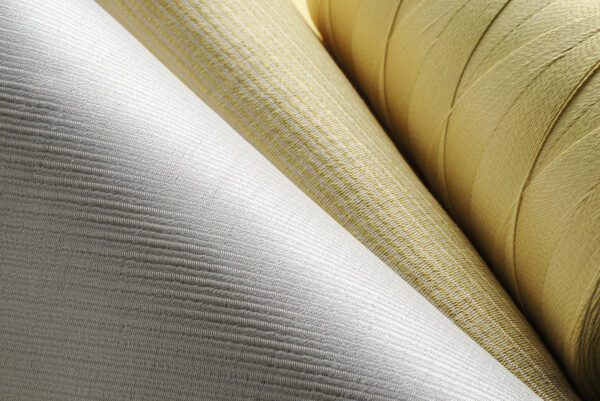
CARCASS
The carcass is essentially the backbone of the endless belt and plays a key role in determining its elasticity and load capacity. If the carcass is not coated on both sides, the friction coefficient also depends on the carcass material used.
Several materials are used for BGK ENDLESS BELTS:
- Polyester is the most commonly used material; it can be dimensioned for different tensile forces depending on the specifications.
- The natural fiber cotton offers particular advantages when sliding carcasses with a low friction coefficient are required.
- Aramid fibers offer particular tensile strength, making them the ideal solution for applications involving the transmission of high forces.
- For carcasses elastic in length, a
spandex-based fiber mix is used.
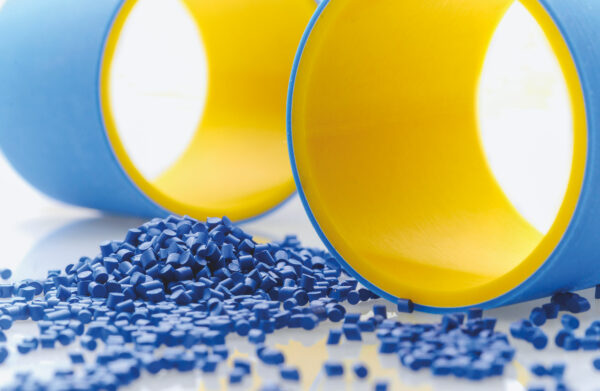
COATING
Once the carcass material has been selected, coatings applied to one or both sides can further define the characteristics of the endless belt. Different coatings can also be applied to each side. The most commonly used coatings are:
- Polyurethane as a economical all-rounder for a wide range of applications.
- Neoprene for specialized applications that require a high-performance, antistatic belt with good chemical resistance.
- Silicone for all applications where high temperature resistance and hygiene are essential, such as in the food industry.
BGK can also easily apply coatings to products from other manufacturers to ensure a closed, seamless, and thus homogeneous surface for various conveyer applications.
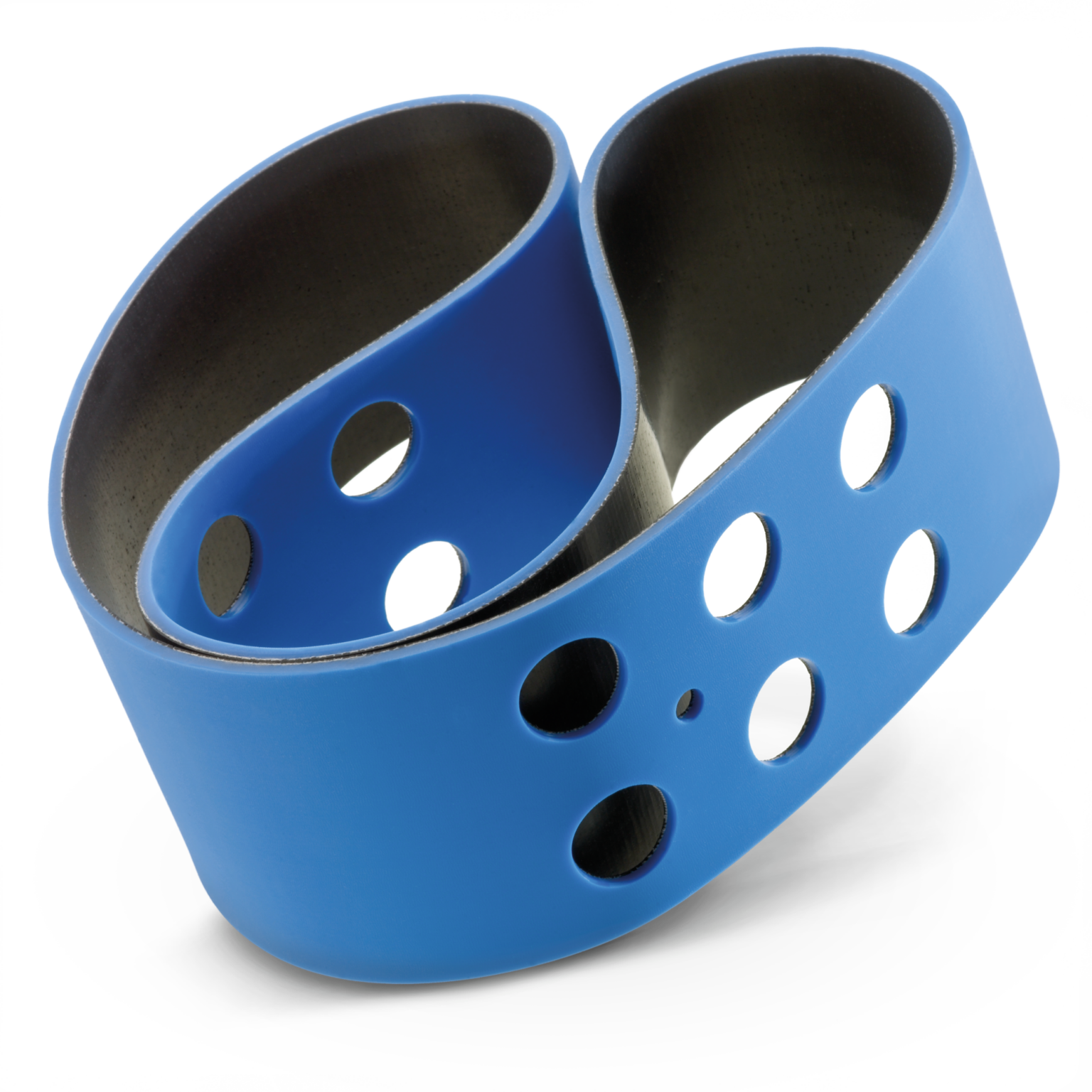
PROCESSING
Once belt and coating are finished, the surface can be processed to fulfill a large variety of functional requirements.
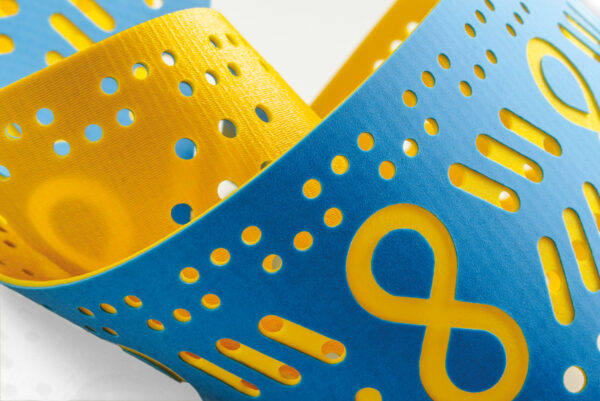
Surface processing such as perforating, punching, grooving, and milling as well as the addition of guiding profiles, cleats, and ribs turns the flat belt into a special belt, innovative and with high performance improvements.
A WIDE RANGE OF COATINGS
The properties of a continuous belt are determined not only by the carcass but primarily by the coating applied to one or both sides. BGK ENDLESS BELTS primarily uses three materials.
FAST, STRONG, AND FLEXIBLE:
THE POLYURETHANE BELT
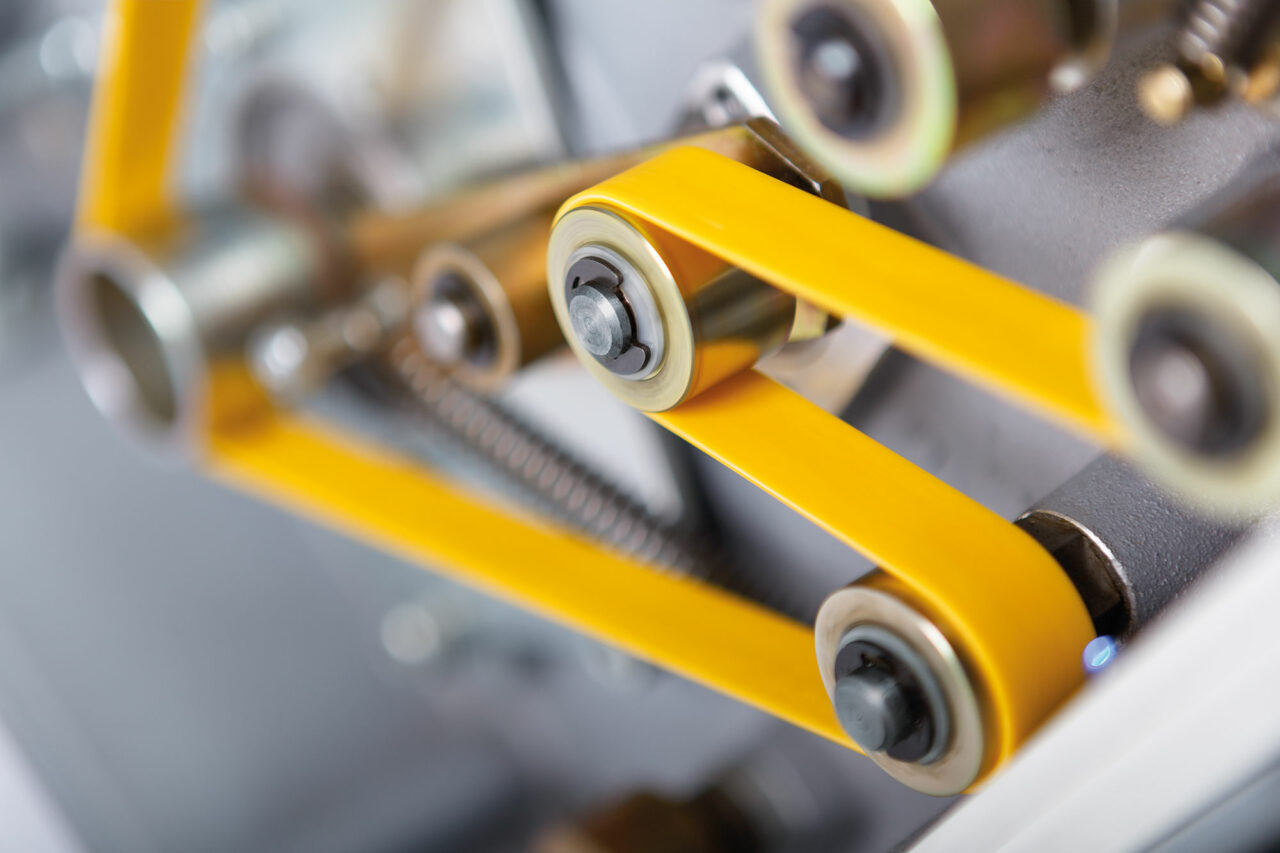
Polyurethane is an extremely versatile plastic that ranges from elastic to rigid. These properties turn it into an all-rounder which can be used for many products and the ideal choice for BGK ENDLESS BELTS.
Polyurethane, known as PU or PUR for short, is an extremely versatile plastic. Depending on the manufacturing process, it can be brittle and hard, or soft and elastic. As a result, it is used as a versatile material in many products that are an integral part of our daily lives.
The properties of PU—ranging from elastic to rigid—are defined not least by the number of cells in the polyurethane. When it has a foamed structure, PU is extremely abrasion-resistant and is therefore used, for example, as a protective coating in pipes or for transporting bulk materials. If, on the other hand, it has a closed and compact structure, it is also suitable for use with food. Here, PU also benefits from the fact that, unlike PVC—which is often used instead—it is free of plasticizers.
Polyurethane offers good resistance to aging, even when exposed to harsh weather conditions and UV radiation, has good recovery properties under repeated bending, and is easy to clean—making it ideal for use as a coating on high-quality BGK ENDLESS BELTS.
DURABLE AND FLEXIBLE:
THE NEOPRENE BELT
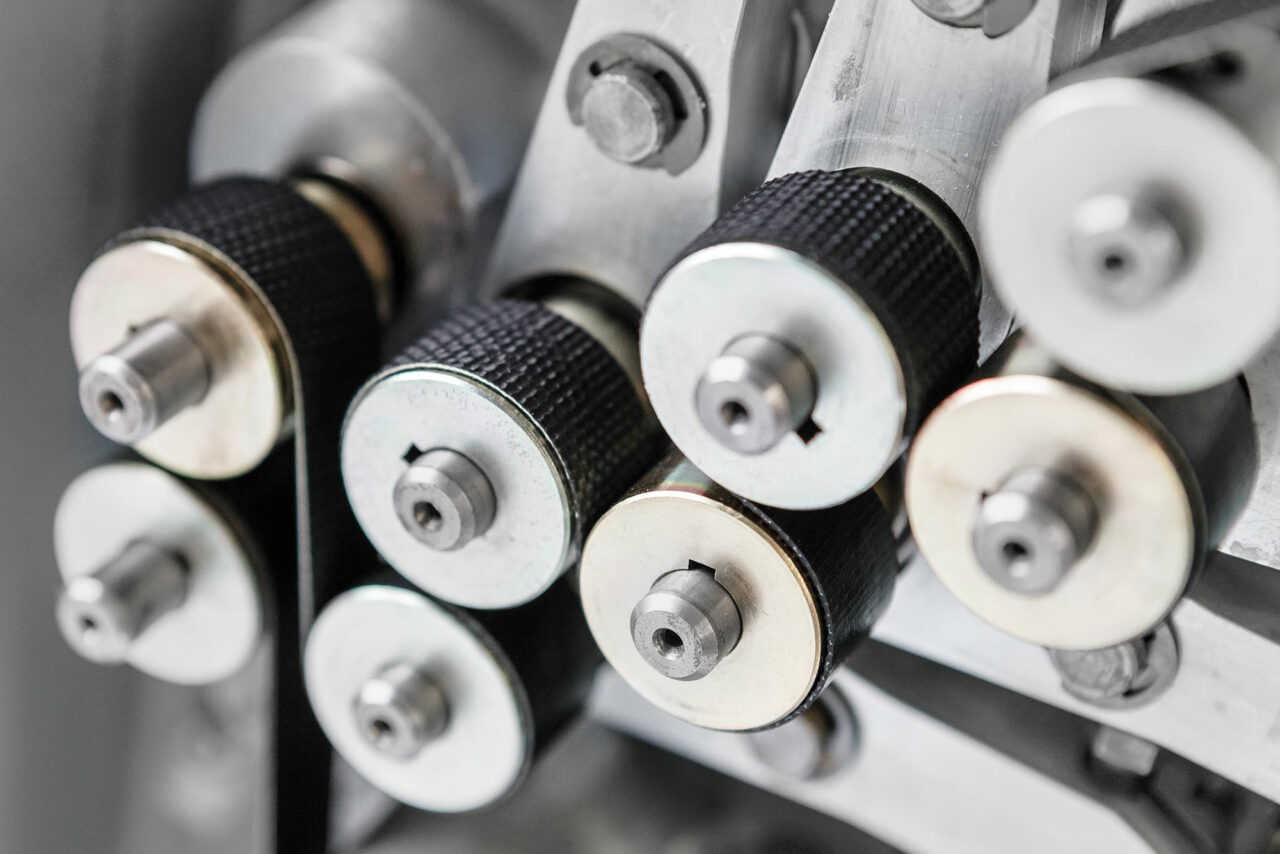
Neoprene is characterized by high chemical resistance and good durability, yet it is also highly flexible, which makes it ideal for transferring forces and power in fast and powerful drive systems.
Chloroprene rubber, better known by its brand name Neoprene, is a synthetic rubber which is used, among other things, in automotive manufacturing and for insulating sportswear.
The material was introduced to the market in 1930 and, in its vulcanized form, is characterized by high chemical resistance (including resistance to oil, for example) as well as good resistance to embrittlement and weathering.
Neoprene is tough and durable, yet highly flexible. This makes it ideal for virtually slip-free power and torque transmission in fast and high-torque drives. Thanks to their high wear resistance, even under demanding conditions, neoprene belts are the perfect solution for this application.
THE CLEAN SOLUTION:
THE SILICONE BELT
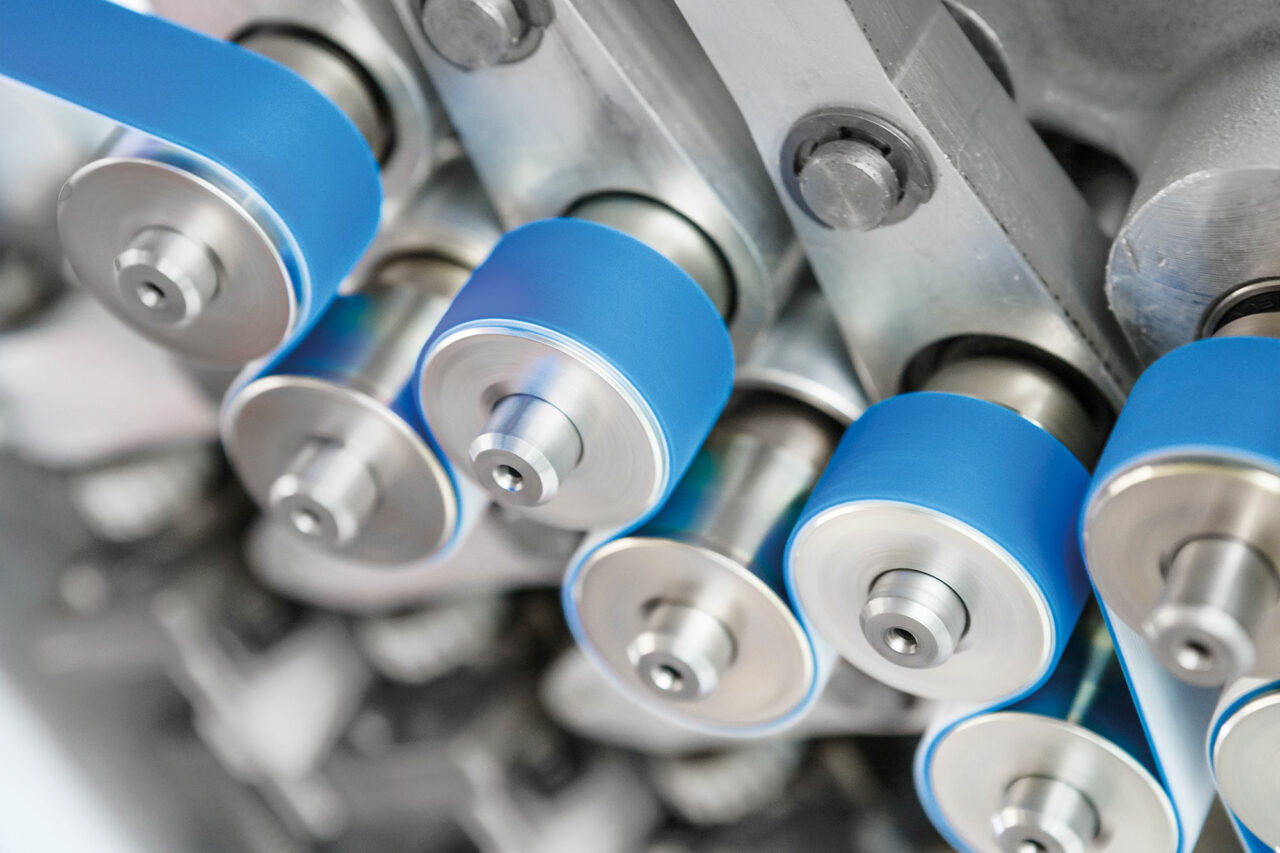
Silicone has a wide range of applications: in wet and dry environments, in extreme cold as well as in extreme heat. It is very well suited for direct contact with food and for use in hygienic environments.
Silicone belongs to the class of synthetic polymers. One of its distinctive features is the structure of its molecules. These are composed of silicon atoms linked together by oxygen atoms. With this combination of a typical inorganic framework and organic components, silicones form a unique type of material whose special properties are unmatched by any other synthetic material.
Silicones can be divided into various groups. While silicone oils and resins are used, for example, in paint manufacturing, silicone rubbers are in demand for continuous belts. They are used in both wet and dry environments and—when combined with the right backing material—can be used in temperatures ranging from extreme cold of -50°C to extreme heat of up to +300°C.
Silicones can be divided into various groups. While silicone oils and resins are used, for example, in paint manufacturing, silicone rubbers are in demand for endless belts. They are used in both wet and dry environments and—when combined with the right carcass material—can be used in temperatures ranging from extreme cold of -50°C to extreme heat of up to +300°C.